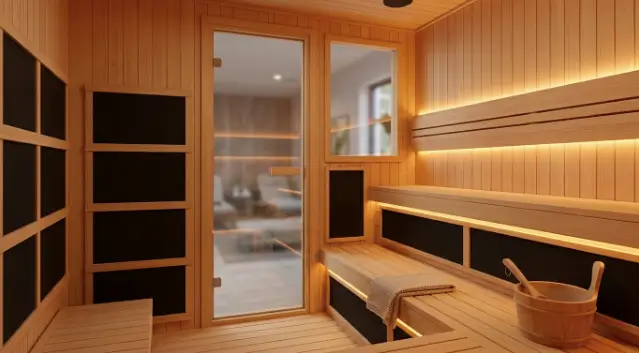
A first infrared sauna comes down to four decisions: carbon versus ceramic panels, whether the amperage fits an existing 120-volt outlet or requires new wiring, a verified low-EMF rating in milligauss rather than a vague marketing claim, and a two-person cabin sized to the room rather than an ambitious future plan. A basic two-person unit typically runs $1,800 to $3,500, heats up in 10 to 15 minutes at 120 to 150 degrees Fahrenheit, and plugs into a standard household outlet with no electrical work required for most models.
Carbon Panels, Ceramic Panels, or Both?
Ceramic infrared emitters concentrate heat output over a smaller surface and run hotter at that specific point, historically used in earlier infrared cabin designs. Carbon panels spread heat across a larger surface area at a gentler, more even output, which is why most current mid-range and premium cabins use carbon panels for full-body coverage, sometimes paired with ceramic emitters at specific points like the lower back or calves for targeted heat. Neither is strictly superior; a beginner should look at total panel coverage and wattage across the cabin rather than fixating on which single material is used, since a cabin with sparse ceramic coverage can underperform one with well-distributed carbon panels even at similar advertised wattage.
Does This Unit Need New Wiring or Not?
The main electrical advantage of infrared over a traditional heat sauna is that most home cabins draw under 15 amps and run on a standard 120-volt household outlet, meaning no dedicated circuit, no electrician, and no permit in most jurisdictions. Larger four to six person cabins with more panels sometimes cross into higher amperage territory and may need a dedicated line, so checking the specific model’s listed amperage against the outlet it will plug into is worth five minutes before ordering. This is the single biggest practical reason infrared has become the common beginner recommendation over a traditional heater that almost always needs new wiring.
What Does Low-EMF Actually Mean, and How Do You Verify It?
Infrared panels generate an electromagnetic field during operation, and “low-EMF” describes shielding designed to reduce that field, typically measured in milligauss at a set distance, often six inches, from the panel surface. Reputable manufacturers publish an actual milligauss figure, sometimes under 3 milligauss for well-shielded panels, rather than the word “low” on its own. A listing that claims low-EMF without a number attached is harder to verify and worth a direct question to the seller, since the term has no fixed legal definition and gets applied loosely across the market.
How Should a Beginner Size the Cabin to the Room?
A two-person infrared cabin, generally 40 to 48 inches wide, fits a spare bedroom corner, a basement nook, or an unused section of a garage without a major room reconfiguration, and is the most common starting size for a reason. Ceiling height matters more than most buyers expect, since a cabin needs several inches of clearance above the roof panel for safety and airflow, which rules out some finished basements with lower ceilings. Measuring the actual install space, including door swing and any nearby furniture, before comparing specific models saves a return shipment on a unit that technically fits the room’s footprint but not its actual usable clearance.
What Should a First-Time Infrared Buyer Check Before Paying?
Beyond panel type and amperage, look at heat-up time, generally 10 to 15 minutes for a home unit, total panel wattage relative to cabin size, and the stated warranty term on the panels and control system, usually one to five years depending on the brand. Comparing a handful of current models side by side, and taking a moment to see the full lineup at a specialty retailer against general big-box listings, gives a clearer sense of where a specific price point sits relative to panel coverage and build quality rather than judging a cabin on sticker price alone.
See also: Why Cybersecurity Needs to Be a Business Priority
Which Use Case Actually Fits Which Buyer?
An apartment dweller with a small spare room and no access to add new wiring is the clearest case for infrared: a plug-in cabin under 15 amps sidesteps the electrical limitations a rental or a small panel would otherwise impose. Someone using a sauna mainly for post-workout recovery a few times a week benefits from the faster 10 to 15 minute heat-up time, since a shorter warm-up fits more easily into a routine already built around training schedules. A buyer specifically concerned about electromagnetic field exposure should prioritize a verified low-EMF panel with a published milligauss number over a cheaper model with vague marketing language, since that concern is exactly what shielding quality addresses. Someone finishing a basement with a lower ceiling height needs to measure clearance before shopping by panel type at all, since a compact cabin footprint may matter more than which material heats the panels. Matching the use case to the decision, rather than buying the most heavily advertised model, is what actually determines whether a first infrared cabin gets used regularly or becomes an expensive spare-room fixture.
What Does the Evidence Say About Infrared Sauna Use Specifically?
Most of the strongest sauna research comes from Finnish cohort studies on traditional heat bathing rather than infrared specifically, which is worth knowing before assuming infrared marketing claims carry the same evidence weight. A 2018 review in Mayo Clinic Proceedings summarized cardiovascular associations tied to regular sauna bathing broadly, and a companion physiology review covered how the body responds to repeated heat exposure, infrared included as one delivery method among several. A 2001 review in The American Journal of Medicine covered both benefits and practical risks of sauna bathing more generally. These remain population-level associations, not proof that any specific infrared session produces a guaranteed outcome, and a beginner should treat marketing claims tied to infrared specifically with more scrutiny than the general sauna research would support on its own.
Frequently Asked Questions
What is the difference between carbon and ceramic infrared panels? Ceramic panels concentrate output over a smaller surface and run hotter at that point, while carbon panels spread heat across a larger area at a gentler, more even output.
Does an infrared sauna need a dedicated electrical circuit? Most home cabins run on a standard 120-volt outlet under 15 amps, so no new circuit is needed. Larger cabins with more panels sometimes require a dedicated line.
What does low-EMF actually mean on an infrared sauna listing? It means the panels and wiring are shielded to reduce the electromagnetic field, measured in milligauss. Reputable brands publish an actual number rather than just the word low-EMF.
How long does it take an infrared cabin to heat up? Most home infrared cabins reach usable temperature in 10 to 15 minutes, faster than a traditional sauna heating a full room of air.
References
- Cardiovascular and Other Health Benefits of Sauna Bathing: A Review of the Evidence, Mayo Clinic Proceedings, 2018
- Effects of heat and cold on health, with special reference to Finnish sauna bathing, American Journal of Physiology, 2018
- Does the Combination of Finnish Sauna Bathing and Other Lifestyle Factors Confer Additional Health Benefits? A Review of the Evidence, Mayo Clinic Proceedings, 2023
By Sam Alvarez